
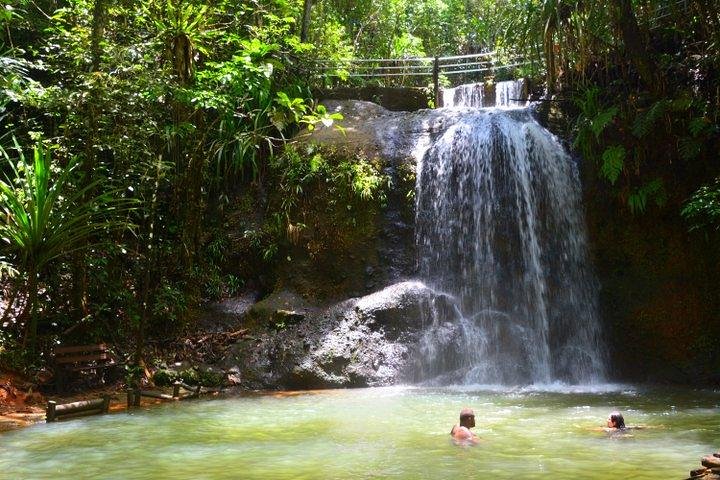
Fiji’s Hidden Green Interior
Fiji’s waterfalls are reached by walking into the island’s volcanic interior — through tropical rainforest, across streams, past village gardens, and down into gorges where the water cascades from highland ridges into natural swimming pools. The journey to the waterfall is as much the experience as the waterfall itself — the transition from the coastal resort environment into the green, humid, bird-loud interior reveals a Fiji that the beach never suggests.
Where to Find Waterfalls
Biausevu Waterfall (Coral Coast, approximately 1.5 hours from Nadi) is the most commonly visited — a 20-metre cascade in a forested gorge, reached by a 20-minute walk through Biausevu village. The village visit (welcome, guide, cultural context) is integrated into the waterfall experience, and the pool at the base is deep enough for swimming and cool enough to be refreshing after the walk.
The Navua River gorge waterfalls are visible from the river during longboat or raft tours — multiple cascades dropping from the sheer, rainforested gorge walls into the river below. Swimming beneath a gorge waterfall after arriving by longboat is one of Fiji’s most distinctive natural experiences.
Tavoro Waterfalls (Bouma National Heritage Park, Taveuni) — three waterfalls accessed by hiking trails of increasing difficulty on Fiji’s “Garden Island.” Taveuni is a separate island and not accessible as a day trip from Nadi, but for visitors with time, the Bouma falls are Fiji’s finest waterfall hiking.
Savu Na Mate Laya waterfall (Wailotua, near the Coral Coast) — a lesser-known cascade accessible through a cave system and river walk. The combined cave-and-waterfall experience is unique.
The Nature Beyond Waterfalls
Fiji’s rainforest ecosystem supports over 1,600 plant species (approximately 60% endemic), 27 native land bird species, flying foxes (fruit bats — the largest bats in Fiji, with wingspans up to 1.5 metres), and the crested iguana (a rare endemic reptile found on a few western Fiji islands). Nature tours that extend beyond the waterfall destination into the forest ecosystem — with guides who identify the bird calls, the medicinal plants, and the ecological relationships — add depth to what could otherwise be a simple hike-to-a-waterfall format.
Frequently Asked Questions
Can I swim at the waterfalls?
Yes. Most mainland waterfalls have natural pools at the base suitable for swimming. The water is fresh, cool (a welcome contrast to the tropical heat), and typically clear. Check conditions — heavy rain raises water levels and can make some pools unsafe.
How difficult are the waterfall hikes?
Most are easy to moderate — 20–45 minutes on forest trails with some uneven terrain, stream crossings, and gentle gradients. Sturdy, closed-toe shoes with grip are essential (the trails are muddy and rooted). Flip-flops are unsafe on these paths.
Do waterfall tours include a village visit?
Most mainland waterfall tours pass through or depart from a village, and the visit includes a welcome, a guide from the community, and often a kava ceremony. The villagers manage the trails and the access — the tour revenue supports the community.
When are the waterfalls at their best?
The wet season (November–April) produces the highest water flow and the most dramatic cascades. The dry season (May–October) offers easier trail conditions and more comfortable hiking weather. The waterfalls flow year-round.